Established in 2016
An online weight loss plan that fits your day
An online weight loss plan gives you structure for everyday meals: what to eat, when, and roughly how much. Diet on Demand is a UAE-based online diet-planning brand, established in 2016. We assess each customer first, and your plan is built around what we learn, including any advice from your doctor.
We won't promise a number on the scale, because no honest plan can.
- Established
- 2016
- Clients served
- 2,470+
- Based in the Emirates
- UAE

What an online weight loss plan can, and can't, do
A plan can take decisions off your plate. It can organise your meals, help you plan ahead and give you something to come back to when the week gets busy.
It can't promise what your body will do. Weight depends on many things, and individual results vary. We'd rather explain what a plan includes than promise an outcome.
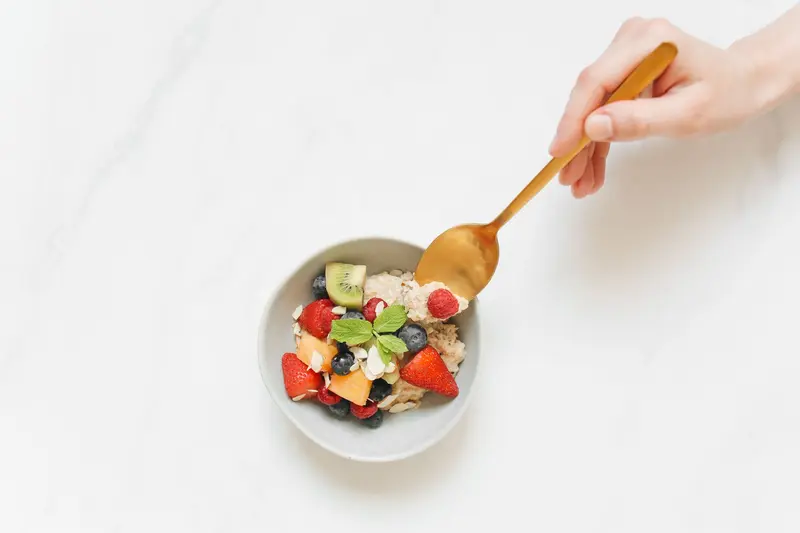
What a steady pace looks like
Public health bodies describe a gradual approach. The CDC says people who lose weight gradually, at about 1 to 2 pounds (roughly 0.5 to 1 kg) a week, are more likely to keep it off. The NHS describes cutting around 600 calories a day as a safe and sustainable approach.
Those are guidelines, not promises, and your own needs depend on your age, height, activity and health. For the numbers and a sample desi chart, read our guide to a diet plan for weight loss.
How to spot an unrealistic promise
Whichever provider you look at, a few signs are worth pausing on:
- Guaranteed results. Nobody can guarantee what your body will do.
- A fixed amount in a fixed number of days. It sounds precise, but it isn't realistic for everyone.
- Detox or "melt fat" language. Ask what the claim is based on.
- Before-and-after photos instead of explanations. Someone else's progress doesn't tell you about your starting point.
- No mention of who it isn't for. A trustworthy plan says when it may not suit you.
If a promise sounds too good to be true, it deserves better evidence, not bigger typography.
Your routine matters more than the chart
A plan can look excellent on paper and still not fit the person following it. Imagine breakfast at seven, lunch at one and dinner at seven, all neatly arranged, for someone who doesn't finish work until nine.
That's why we start by assessing the customer, not by handing over a document. Everyday foods, including roti, rice and daal, can belong in a plan. Tell us what you eat and we'll take it from there.
When to speak to your doctor first
A general weight loss plan isn't medical care. Speak to your doctor or a registered dietitian before you start if you're pregnant or breastfeeding, under 18, managing diabetes, kidney disease or another long-term condition, have had an eating disorder, or if food and weight feel stressful.
If you've already been given advice, it comes first, and we'll build your plan around it.
Getting started is simpler than you think.
Step 1
Tell us what you're looking for
We assess each customer first, so the plan starts from your situation.
Step 2
Get your plan
It reflects what we learn, including any advice from your doctor.
Step 3
Take it one meal at a time
Use it to plan ahead. You don't need every meal figured out forever.
A few things you might be wondering
Can I lose weight with an online plan?
A plan can give you structure around meals, which many people find helpful. It can't guarantee a result, and individual experiences vary. We'd rather tell you that than promise something your body decides.
How fast should weight loss be?
The CDC describes about 1 to 2 pounds (roughly 0.5 to 1 kg) a week as a gradual pace that people are more likely to keep off. Your own pace depends on your circumstances, so it's worth discussing with a doctor if you're unsure.
Do I have to give up roti, rice or other favourite foods?
No food has to be off the menu by default. Portions, cooking methods and overall balance matter more than banning a food. We can't promise every food fits every medical situation, so tell us about your health and preferences.
Is an online weight loss plan safe for everyone?
No. If you're pregnant, breastfeeding, under 18, have a medical condition or a history of disordered eating, speak to your doctor or a registered dietitian first. A general plan isn't a substitute for medical care.
Why pay for a plan when there's free advice online?
Free resources are genuinely useful, and the basics of balanced eating don't need a purchase. A plan adds structure: someone has organised the information around you so you don't have to. If you only need general guidance, you may not need a plan at all.
Does Diet on Demand guarantee results?
No. We've served 2,470 clients since 2016, but that number describes our history, not anyone's outcome. We'd rather explain what a plan includes than promise what it will do.
Ready to make meals a little easier?
You don't need to figure everything out at once. Find a plan that gives you a clearer place to begin.
Explore Diet PlansSources and further reading
- CDC: Steps for Losing Weight — a gradual pace of about 1 to 2 pounds a week.
- NHS: Calories and weight loss — a deficit of around 600 calories a day as a safe and sustainable approach.
This page is general information, not medical advice. Dietary needs vary. If you have a medical condition, take medication that affects your nutritional needs, are pregnant or breastfeeding, or need a therapeutic diet, consult an appropriately qualified healthcare professional before making significant changes to your diet.